
Explore Our Services:
Refresh Your Home’s Interior Today
- Free Color Consultations
- Premium Paints Only
- Dust-Free Sanding Techniques
- 5-Year Warranty
Stucco Repair in Queen Creek and the East Valley, AZ
BBB Accredited Business | Arizona Registrar of Contractors | Sherwin-Williams Platinum Certified | EPA Lead-Safe Certified
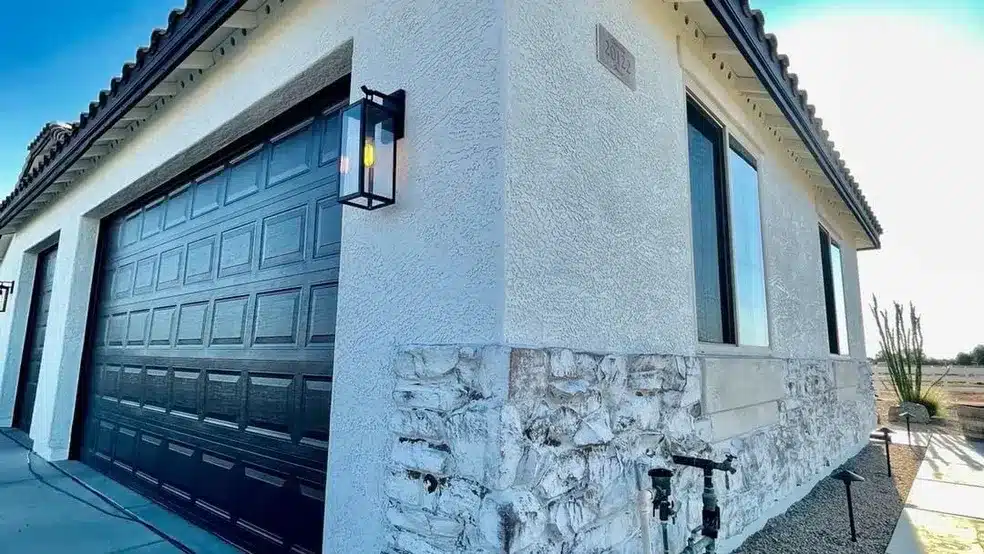
Why Choose State 48 Painting Company for Stucco Repair?
A lasting stucco repair starts with identifying whether the defect is a surface crack, open joint, loose patch, delamination, impact damage, failed previous repair, or moisture-related condition. State 48 Painting Company defines the repair method before applying patch material, texture, primer, or coating.
Founder Mike Mendoza started as a painting helper and later ran production for one of Arizona’s largest painting companies. He founded State 48 Painting Company in 2015 to put craftsmanship ahead of volume. That coating and production experience matters because a repair must be sound, visually blended, and compatible with the existing finish.
What the written stucco scope should identify
Damage type: The proposal states whether the work covers hairline cracks, open cracks, chips, holes, loose stucco, damaged corners, failed patches, or localized delamination.
Cause and limits: Stucco repair does not correct foundation movement, framing failure, roof leaks, window leaks, failed flashing, active plumbing leaks, drainage problems, or structural settlement. Those causes must be corrected by the appropriate trade.
Repair method: The scope identifies removal, crack preparation, bonding, reinforcement where required, patch material, cure time, texture, primer, and paint limits.
Finish expectations: Texture can be blended closely, but exact invisibility is not guaranteed on every aged, heavily painted, hand-applied, faded, or previously repaired wall.
Warranty: Covered materials and labor carry a five-year warranty.
Limited-Time Offer: Get 20% off any stucco or painting service when you schedule your free estimate today.
Call or text: 602-717-0572
What Stucco Problems Do We Repair?
Our stucco repair service covers common exterior damage, including hairline cracks, open cracks, chips, impact holes, loose patches, damaged corners, failed previous repairs, localized delamination, and texture mismatch. The repair method changes with crack width, movement, depth, substrate condition, moisture, and the existing coating.
Hairline and surface cracks
Hairline cracks often form as stucco cures, moves with temperature changes, or weathers over time. A fine surface crack may need cleaning, opening, compatible filler, and coating preparation. Simply brushing paint over it can leave the defect visible or allow it to reopen.
Not every hairline crack needs the same product. Existing elastomeric coating, acrylic paint, bare cement stucco, and synthetic finish systems require different compatibility decisions.
Open, recurring, or displaced cracks
An open crack, offset edge, stair-step pattern, recurring repair, or rapidly changing defect needs closer evaluation. These conditions may indicate continued movement, substrate failure, settlement, or water entry.
Patch material does not stop structural movement. The underlying cause must be understood before a cosmetic repair is treated as final.
Chips, holes, and impact damage
Ladders, equipment, landscaping, vehicles, fasteners, and construction work can chip or puncture stucco. The damaged area is cut back to sound material, cleaned, bonded, filled in appropriate lifts, and textured after the patch reaches the required condition.
Deep repairs may require more than one application. Packing a thick patch into an unprepared opening increases shrinkage, cracking, and weak bonding.
Loose stucco and delamination
Stucco that sounds hollow, moves under pressure, bulges, or separates from the substrate cannot be repaired by coating over the face. Loose material must be removed back to sound edges so the condition beneath it can be inspected.
Localized delamination may involve failed bond, moisture, corrosion, damaged lath, or an older patch.
Damaged corners and penetrations
Corners, hose bibs, light fixtures, conduit, vents, windows, doors, and wall penetrations are common failure points. Repair work must respect joints, flashings, sealants, weep paths, and components designed to move or drain.
Stucco patching should not bury a drainage opening or replace proper flashing and sealant details.
Failed previous repairs
Previous repairs often stand out because the patch is too hard, too smooth, too thick, poorly bonded, or coated before curing. Failed material is removed to sound edges before a compatible repair system is installed.
Our Stucco Repair Process
Our stucco repair process follows a controlled sequence: inspect, classify the damage, protect the property, remove unsound material, prepare sound edges, apply bonding or reinforcement where required, build the patch, match the texture, allow curing, prime, coat, and complete a final walkthrough.
1. Inspection and written scope
We inspect the crack pattern, width, depth, surrounding texture, hollow areas, previous patches, coating condition, moisture signs, penetrations, and nearby joints. The estimate states the included repair areas, access, texture, primer, paint limits, and known exclusions.
Wide, displaced, recurring, moisture-stained, or rapidly changing cracks are documented before repair.
2. Property protection
Windows, doors, roofing edges, hardscape, landscaping, pool equipment, fixtures, and adjacent surfaces are protected before cutting, grinding, patching, texturing, priming, or painting begins.
Dust and debris are controlled during removal. No exterior repair process should be described as completely dust-free.
3. Remove loose or failed material
Loose stucco, weak edges, failed filler, delaminated material, and unstable previous patches are removed back to sound material. Cracks are opened only as required by the selected repair method.
Applying new material over dust, chalk, loose coating, or weak stucco creates a repair bonded to the failure instead of the wall.
4. Prepare and reinforce the repair
The opening is cleaned and conditioned for the repair material. Bonding agents, mesh, lath, backer, sealant, cementitious patch, acrylic patch, or elastomeric repair material are used only when compatible with the defect and assembly.
A single elastomeric filler is not the correct answer for every crack, hole, corner, or delaminated area.
5. Build and cure the patch
Repair material is applied at the thickness and in the number of lifts required by the product and defect. Deep patches need controlled buildup and curing to reduce shrinkage, cracking, and weak centers.
Temperature, direct sun, wind, humidity, patch depth, and product instructions affect cure time. Primer or paint is not applied until the repair reaches the required condition.
6. Match the texture
The crew evaluates the existing texture pattern, aggregate, density, direction, paint buildup, and surrounding light. Smooth, lace, sand, knockdown, dash, and skip-trowel finishes require different tools and application methods.
The blend area may extend beyond the patch so the transition is less visible. Exact matching is less predictable on aged, faded, hand-applied, or heavily coated stucco.
7. Prime, coat, and complete the walkthrough
Bare or repaired stucco receives a compatible primer or conditioner when required. Spot coating works only when the existing color, sheen, texture, and weathering allow a reasonable blend. Repainting the full wall or elevation creates the most uniform appearance.
The final walkthrough checks the repair plane, texture transition, coating coverage, cleanup, and written scope.
East Valley stucco faces direct UV, large temperature swings, monsoon moisture, irrigation overspray, and movement at joints and penetrations. We classify each crack or patch first, remove unsound material, match the repair system to the wall, and allow proper cure time before primer or paint.
Why Do Stucco Cracks Keep Coming Back?
Stucco cracks return when the wall continues to move, moisture reaches the assembly, the repair is bonded to loose material, the filler is incompatible, the patch is too rigid, or curing and coating occur too quickly. A lasting repair addresses the defect type and substrate condition instead of hiding the line with paint.
Movement and settlement: Foundation movement, framing movement, thermal expansion, vibration, and settlement can reopen a repair. Stucco patching does not stabilize the structure beneath the wall.
Moisture and drainage: Roof runoff, failed flashing, window or door leaks, plumbing, irrigation overspray, and poor drainage can keep a wall wet.
Weak edges: New patch material needs sound, clean edges. Dust, chalk, loose coating, and crumbling stucco weaken the bond.
Incompatible materials: A repair product that is too hard, too soft, too thick, or incompatible with the wall may crack or separate.
Rushed curing: Coating too early can trap moisture, change color, weaken adhesion, or make the patch visible.
We hired State 48 Painting to do the repairs and they did a fantastic job, it looks like the damage never happened. Mike was communicative, professional, and efficient and the worker who performed the repairs was SUPER quick. It has been a pleasure dealing with this company!
Pricing and Estimates
Stucco repair estimates depend on crack type, affected area, height, access, removal, substrate condition, lath exposure, patch depth, texture, cure time, primer, paint limits, and whether the full wall or elevation needs recoating. State 48 Painting Company provides a written scope after inspecting the damage.
Detailed cost guidance belongs on the Arizona price page or a future stucco repair cost guide. Do not add fixed crack or square-foot prices to this page unless they are approved company figures.
Review the Arizona house painting cost guide and calculator.
Areas We Serve
State 48 Painting Company is based in Queen Creek and provides stucco repair throughout Chandler, Gilbert, Mesa, Scottsdale, and San Tan Valley. Common projects include crack repair, damaged patches, corners, wall penetrations, loose stucco, texture blending, and repair before exterior painting.
Frequently Asked Questions About Our Stucco Repair Services:
Can you match my existing stucco texture?
How long does stucco repair take?
Will elastomeric coating stop stucco cracks?
Can you repair soft or bubbling stucco?
Do you repair second-story walls and chimneys?
Is stucco repair permanent?
Does the five-year warranty cover stucco repair?
Ready to Restore Your Home’s Exterior?
Protect your biggest investment with professional stucco repair and recoating from State 48 Painting Company.
Call or text: 602-717-0572
Address: 20314 E Arrowhead Trail, Queen Creek, AZ 85142
Hours: Mon–Fri, 9am–8pm
Book today and get 20% off any stucco repair or painting service.