Explore Our Services:
Refresh Your Home’s Look Today
- Free Color Consultations
- Premium Paints Only
- Dust-Free Sanding Techniques
- 5-Year Warranty
Interior House Painting in Queen Creek and the East Valley, AZ
BBB Accredited Business | Arizona Registrar of Contractors | Sherwin-Williams Platinum Certified | EPA Lead-Safe Certified
Why Choose State 48 Painting Company for Interior Painting?
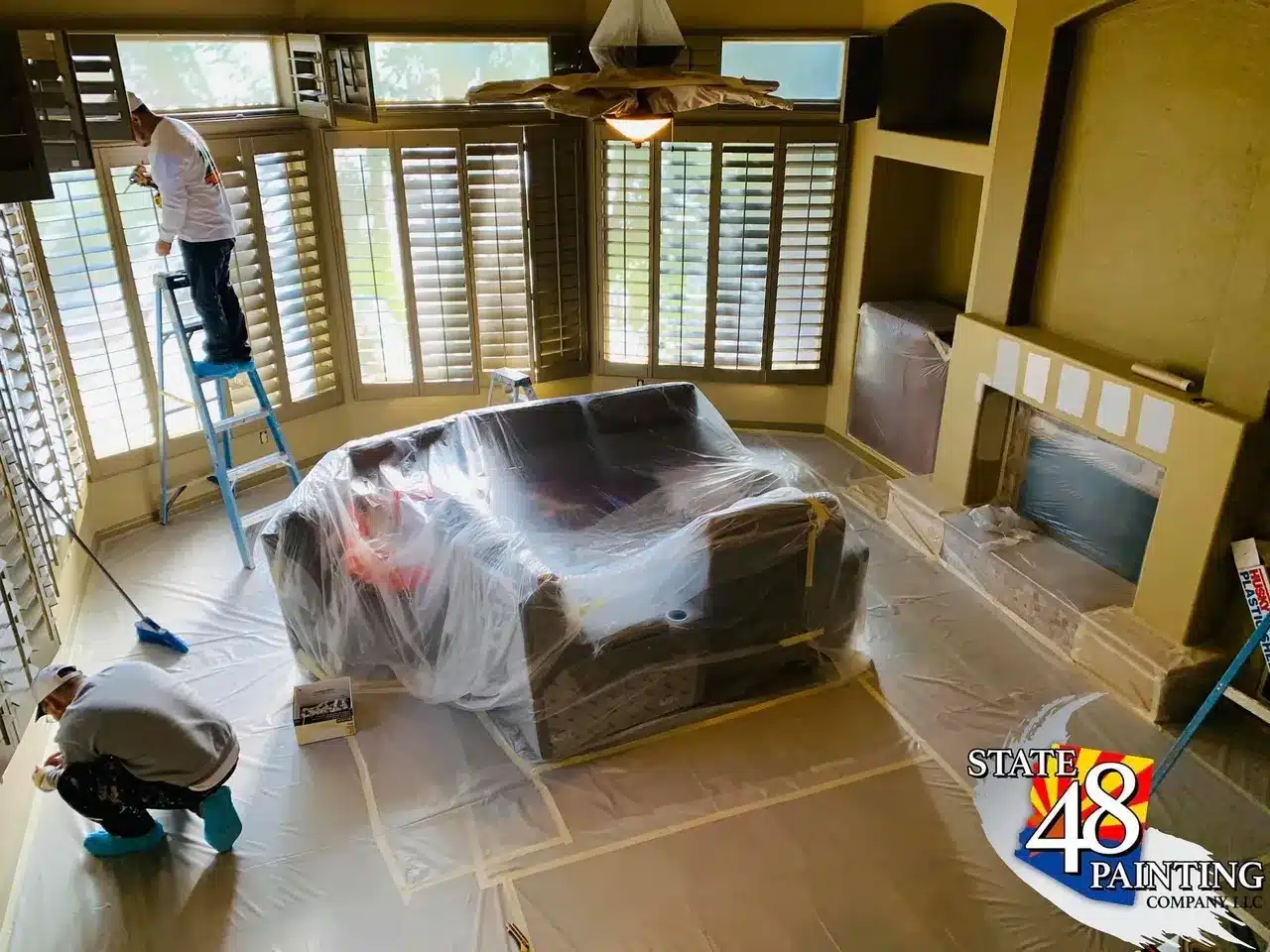
Homeowners choose State 48 Painting Company because the work starts with surface condition, not color alone. We document the room-by-room scope, protect floors and furnishings, repair minor defects, select primers and sheens for each surface, follow product recoat requirements, and back covered materials and labor with a five-year warranty.
Founder Mike Mendoza started as a painting helper and later ran production for one of Arizona’s largest painting companies. He founded State 48 Painting Company in 2015 to put craftsmanship ahead of volume. That experience shapes the written scope, prep sequence, crew expectations, and final walkthrough on each interior project.
What the written scope should identify
Rooms and surfaces: The proposal names the walls, ceilings, baseboards, trim, doors, casings, closets, and accent walls included in the project. Items not listed are not assumed.
Preparation: Nail holes, minor cracks, loose caulk, glossy surfaces, stains, and visible patch edges require different prep. The estimate identifies included repairs and calls out damage that needs a separate drywall scope.
Products and finish: The proposal lists the product category, color, sheen, and coat system. We follow the manufacturer’s dry-time and recoat requirements rather than rushing the next coat onto soft paint.
Protection and cleanup: Floors, furnishings, fixtures, hardware, and adjacent surfaces are protected before painting starts. The crew completes daily cleanup and a final punch list before removing the last protection.
Warranty: Covered materials and labor carry a five-year warranty.
Lead-safe work in older homes
For homes built before 1978, painted surfaces require additional judgment before sanding, scraping, or repair. State 48 Painting Company is EPA Lead-Safe Certified. Lead-safe containment, dust control, and cleanup requirements apply when regulated painted surfaces are disturbed.
Limited-Time Offer: Get 20% off any painting job. Ask about your discount when you call.
Call or text: 602-717-0572
What Interior Surfaces Do We Paint?
Our interior painting scope covers the surfaces homeowners touch, clean, and notice every day: drywall walls, textured ceilings, baseboards, trim, doors, casings, kitchens, bathrooms, and accent walls. Each surface gets a prep and coating plan based on porosity, previous paint, moisture exposure, traffic, and the finish the room needs.
Walls and ceilings
Walls and ceilings receive cleaning where needed, minor patching, sanding, spot priming, and an even finish coat system. New patches must be feathered and sealed before painting. Otherwise, the repair can flash through the finish as a dull or shiny spot.
Drywall holes, recurring cracks, soft gypsum, loose paper, heavy texture damage, and water-damaged areas belong in a separate drywall repair scope before painting begins.
Learn about drywall repair and texture matching.
Baseboards, trim, doors, and casings
Trim surfaces collect hand oils, cleaning residue, dust, and old glossy coatings. We clean and degloss the surface, sand defects, caulk appropriate non-moving gaps, use adhesion primer when required, and apply a durable enamel selected for repeated contact and cleaning.
Paint does not correct loose trim, failed joints, or movement cracks. Those conditions must be repaired before the finish coat.
Kitchens, bathrooms, and laundry areas
Kitchens, bathrooms, and laundry rooms need washable coatings that tolerate fingerprints, splashes, steam, and routine cleaning. Satin or semi-gloss finishes are common choices, but the product and sheen depend on wall condition, ventilation, and how much moisture reaches the surface.
Paint is not a moisture repair. Active leaks, soft drywall, mildew growth, or recurring stains must be corrected before primer and finish paint are applied.
Accent walls and color updates
Accent walls work when the color responds to the room’s fixed materials, daylight, and sightlines. We use on-wall samples because Arizona daylight, west-facing windows, warm flooring, and artificial lighting can shift undertones far more than a small store chip suggests.
Cabinet painting lane note
State 48 Painting Company has referenced cabinet painting, but the exact preparation system, application method, cure schedule, surfaces accepted, and warranty coverage need verification. Keep cabinet content brief on this page until a dedicated cabinet painting page is approved.
What Is Our Interior Painting Process?
Our interior painting process follows a fixed sequence: inspect, protect, clean, repair, sand, prime, paint, detail, and verify. The written estimate identifies rooms, surfaces, colors, sheen, prep, product category, coat system, and schedule. That sequence prevents adhesion problems, flashing, visible patches, crooked cut lines, and avoidable cleanup issues.
1. Walkthrough and written room plan
We inspect each room, confirm the included surfaces, identify repairs, note high ceilings or difficult access, and record colors and sheen. The plan also states which small items the homeowner removes and how larger furnishings will be protected or repositioned.
2. Protect the occupied home
The crew protects flooring, furnishings, countertops, fixtures, hardware, and adjacent finishes before opening paint. Switch plates and removable hardware are handled as the scope requires. Work areas stay organized so children, pets, and household traffic do not cross wet coatings or exposed tools.
3. Clean, repair, sand, and caulk
Paint adheres to a sound, clean, dull surface. We remove surface dust and residue, patch minor defects, feather repair edges, sand glossy or uneven areas, and caulk suitable gaps. Dust-control sanding practices reduce airborne debris, but no sanding process should be described as completely dust-free.
4. Prime for the condition
Primer is selected for the problem it must solve. Dry, resolved stains may need stain-blocking primer. Bare drywall compound needs sealing. Glossy or hard-to-bond surfaces may need adhesion primer. A finish coat is not a substitute for the correct primer.
5. Apply the specified finish system
We cut clean lines at ceilings, corners, trim, and transitions, then apply the coat system listed in the proposal. Coverage is checked under the room’s actual lighting. Each coat receives the required dry time before the next coat or normal use.
6. Detail, clean, and complete the walkthrough
The crew checks cut lines, coverage, patch visibility, drips, hardware, and protected surfaces. We complete the punch list, remove masking and coverings, clean the active work area, and walk the finished rooms with the homeowner.
We do not coat over active moisture, loose drywall paper, soft gypsum, unstable patches, failing substrate, or recurring stains. Painting over those conditions hides the warning sign without fixing the cause, which adds repainting and repair cost later.
Which Paint Sheen Works Best in Each Room?
Sheen controls how a wall looks, cleans, and reveals surface defects. We use flatter finishes where glare would exaggerate texture, and more washable finishes where moisture, fingerprints, and repeated cleaning are expected. The final choice also depends on the product line, wall condition, daylight, and how the room is used.
-
Open living areas: Matte or eggshell finishes reduce glare and keep broad walls from highlighting every roller edge, patch, or texture variation. Eggshell adds cleanability without the reflection of a higher sheen.
-
Bedrooms: Matte and eggshell finishes suit lower-contact rooms and create a softer appearance. Low-odor and low-VOC product options help occupied homes return to normal use with less odor.
-
Kitchens, bathrooms, and laundry rooms: Satin or semi-gloss finishes provide more washability where moisture and fingerprints occur. Paint still depends on working ventilation and a dry substrate.
-
Baseboards, trim, doors, and casings: Durable enamel in satin or semi-gloss stands up to hands, cleaning, and impact better than standard wall paint. Gloss level also affects how clearly dents, brush marks, and old defects show.
-
Color testing: We place test patches on the actual wall and review them in daylight and evening light. East-facing, west-facing, and artificial light can make the same color read differently throughout the day.
Not sure where to start? We’ll bring curated palettes and test patches so you can see options on your actual walls and lighting.
How Do We Protect Your Home While Painting?
Interior painting should not leave dust on furniture, paint on flooring, or rooms unusable for days. Our crews establish protection before opening paint, work room by room when needed, control sanding dust, store tools safely, and clean the work area each day. Homeowners know which rooms are active and when they return to use.
Minimal disruption
Room-by-room scheduling keeps more of the home functional during the project. The written schedule identifies the work sequence, access needs, and any rooms that should remain unused while coatings dry.
A clean, controlled work area
Protection is part of the job, not an optional add-on. Floors, furnishings, counters, fixtures, and nearby finishes are covered or masked based on the work being completed. The crew removes waste and organizes tools at the end of each workday.
Low-odor products and ventilation
Low-VOC does not mean odor-free, and dry-to-touch does not mean fully cured. We select occupied-home product options and ventilate according to product instructions and site conditions. Homeowners receive practical guidance on room use, cleaning, and cure time.
Straight lines and a uniform finish
Clean cut lines depend on steady technique, sound masking decisions, and a stable edge. Smooth-looking walls depend on feathered patches, correct primer, even application, and inspection under the room’s real lighting.
Gustavo and his crew did an amazing job, sealing all the cracks, fixing the ceiling on my patio, really hard workers, very professional people, they explained what kind of primer they used, Gustavo made sure that I was getting good quality paint, very friendly.
– Leonardo Cruz
How Are Interior Painting Estimates Built?
Interior painting estimates are based on measurable scope, not a flat room count. We price wall and ceiling area, ceiling height, trim and door detail, surface condition, repairs, color changes, access, product selection, and the required coat system. Your written proposal lists the included work, products, schedule, and warranty coverage.
Published Arizona planning ranges
State 48 Painting Company’s Arizona price guide lists these planning ranges:
- Single room: $300 to $900
- Whole interior: $1,500 to $5,500
- Trim and doors: $500 to $1,800
- Basic repaint: $1.50 to $2.50 per square foot
- Average repaint with light repairs: $2.50 to $3.50 per square foot
- Heavy preparation or multiple colors: $3.50 to $5.00 or more per square foot
These figures are market planning ranges, not fixed quotes. A low total is not comparable when the scope excludes repairs, primer, ceilings, trim, color changes, protection, or the coat system needed for uniform coverage.
Ask about our current 20% off to lock in savings for your project.
Review the full Arizona house painting price guide and calculator.
How long does the work take?
Typical painting projects take 2 to 7 days. Room count, ceiling height, surface repairs, trim detail, color changes, drying conditions, and access determine the final schedule. The written proposal should state the expected work sequence and project duration.
Where Do We Provide Interior Painting?
State 48 Painting Company is based in Queen Creek and provides interior painting across the East Valley, including Chandler, Gilbert, Mesa, Scottsdale, and San Tan Valley. The company also serves Tempe and Phoenix. Dedicated city pages explain local service coverage, while this page stays focused on interior painting methods, surfaces, and homeowner decisions.
-
Queen Creek, home base
-
Tempe
-
Phoenix
Local address: 20314 E Arrowhead Trail, Queen Creek, AZ 85142
Frequently Asked Questions About Interior House Painting
These answers cover the questions homeowners ask before an interior repaint: timing, preparation, furniture, products, cost, moisture damage, and whether professional work is worth the expense. Final scope depends on the actual surfaces, but the standards remain the same on every project: protect, repair, prime correctly, coat evenly, and verify the result.
How long does interior house painting take?
Most State 48 Painting Company projects fall within a 2 to 7 day window. A single room can take less time, while whole-home work, tall ceilings, detailed trim, repairs, multiple colors, and required dry times extend the schedule. The written estimate states the expected sequence and duration.
Do I need to move furniture before the painters arrive?
Homeowners should remove small decor, fragile items, electronics, wall hangings, and personal belongings from active rooms. The crew protects larger furnishings and floors according to the written scope. Clear access reduces damage risk and gives painters room to prep and coat each surface correctly.
Do you use low-VOC or low-odor interior paint?
State 48 Painting Company offers low-VOC and low-odor product options for occupied interiors. Product selection also accounts for substrate, sheen, washability, moisture exposure, and manufacturer instructions. Low-VOC paint still requires ventilation and product-specific dry and cure time.
Can you paint over a water stain or drywall crack?
We do not treat active moisture, soft drywall, loose paper, or recurring cracks as paint-only problems. The leak or movement must be corrected, damaged material must be repaired, and dry stains must be sealed with the right primer before finish paint. See our drywall repair service for repair-only scope.
How much does interior painting cost in Arizona?
Published planning ranges run from $300 to $900 for a single room and $1,500 to $5,500 for a whole interior. Basic repaints commonly range from $1.50 to $2.50 per square foot, while heavy preparation or multiple colors reach $3.50 to $5.00 or more. Review the Arizona painting price guide for the full breakdown.
Is professional interior painting worth the cost?
Professional interior painting is worth the cost when the project involves occupied rooms, tall ceilings, detailed trim, surface repairs, strong color changes, stains, or a finish that must hold up to cleaning. A small empty room with sound walls is more practical for DIY. The professional advantage is controlled prep, protection, product selection, uniform coverage, and less rework.
Ready to Refresh Your Home?
Bring your rooms back to life with a clean, modern finish; done right the first time.
Call or text: 602-717-0572
Address: 20314 E Arrowhead Trail, Queen Creek, AZ 85142
Hours: Mon–Fri, 9am–8pm
Claim your 20% off any painting job when you schedule your estimate this week.
Arizona’s most trusted home painting company.
Social Media